 |
 |
 |
|
Group Captain "Black" Irving Smith CBE, OBE, DFC - RAF Jever Station Commander 1Oct58 to 21Sep61 Obituary for a Personality from RAF Jever from Daily Telegraph 19Feb2000 |
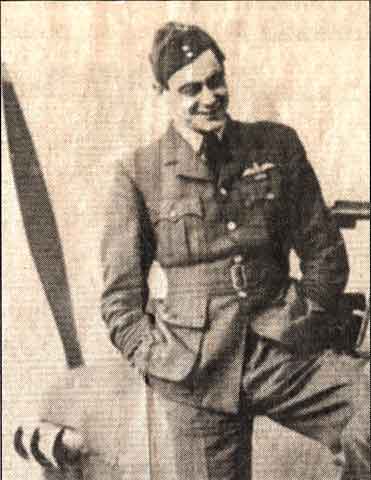 Smith: chalked up two Me 109s on the same day Battle of Britain pilot who led the low-level raid on Amiens prisonwhich liberated Resistance fighters facing execution  GROUP CAPTAIN IRVING SMITH, who has died aged 82, scored six kills in the Battle of Britain and won two DFCs; he later led the historic raid on the German prison at Amiens.A New Zealander, Smith took command of No 487 - a Royal New Zealand Air Force squadron equipped with Mosquitos - early in February 1944. On February 18, he led a raiding force of 18 aircraft in Operation Jericho, which aimed to breach the walls of the jail and free the 700 prisoners held there, many of whom faced imminent execution.Flying in blizzard conditions, Smith came into the attack just above the ground at the vulnerably low speed of 180 mph. His task was to breach the prison's north and east walls, which were 20 ft high and three feet thick; the hope was that each of his four 500 lb bombs would lodge close enough to the walls to shatter the masonry. It was then the job of the six Mosquitos of 464 Squadron to blow the ends off the main building.The plan worked. Smith, the first to attack, successfully breached the walls. Shortly after the war; he visited Amiens to inspect his handiwork and was gratified to discover that every Mosquito crew in his first section had scored a bullseye.Casualties inside the prison were heavy and some civilians outside were killed, but 258 prisoners escaped through the breach made by the New Zealanders. Later in 1944, Smith led a successful raid on a barracks at Poitiers, where troops were assembling to attack the Maquis, and then he destroyed the SS headquarters at Vincey, near Metz.Irving Stanley Smith was born on May 21 1917 at Invercargill, New Zealand. He was educated at Whangarei High School and Sedden Memorial Technical College, Auckland, where he played the cornet and tenor horn as a member of the Ponsonby Boys' Brass Band.He was then apprenticed as a coach painter, but in 1939, after being given a short service commission in the RNZAF, he volunteered to train in Britain and sailed for London in July. Having completed his flying training a year later, Smith was sent to No 151, a Hawker Hurricane fighter squadron based at North Weald.Being the darker in complexion of two Smiths on the squadron, he was dubbed "Black" Smith, the other inevitably becoming known as "White".On August 15 1940, as the Luftwaffe mounted its Eagle offensive, Smith flew three patrols, destroying two Me 109 fighters and damaging a third. Nine days later he shot down an He 111 bomber, and on August 30 combined with another pilot to - as he later put it - "frighten" an Me 109 pilot straight into the ground.The next day, Smith flew four sorties, winging a Do 17 bomber on the first and destroying another on the third. The following day 151 Squadron was withdrawn for a rest. Smith was one of only four surviving pilots from the original squadron and, despite having notched up a mere two months of operational flying experience, was already regarded as an old hand.On October 2, while training replacement pilots, he was sent to intercept a lone He 111 bomber which had attacked the Rolls-Royce factory at Derby. Flying in cloud and on instruments, Smith felt the slipstream of another aircraft. Looking up, he glimpsed the Heinkel and, as the aeroplane emerged from the clouds, he noticed that its starboard engine had stopped. He attacked, putting the port engine out of action and forcing the bomber to ditch in the sea north of Skegness.The squadron was then partly re-equipped with Boulton Paul Defiants and became a night fighter squadron. Smith was awarded the DFC in March, and on May 10 1941 - the night of the heaviest raid of the Blitz - he destroyed an He 111 north of the Thames Estuary, having flown with his hood open to see his target better.In February 1942 Smith took command of 151. He celebrated his appointment the next night, while on convoy protection duty near Cromer, Norfolk. As six German raiders crossed the East coast at near sea level, Smith threw his squadron into the attack and routed the enemy. His gunner, Flight Sergeant Beale, shot down a Do 217 and damaged a Ju 88.In April, the squadron was re-equipped with the fast and versatile Mosquito. On the night of June 24, enemy bombers attacked factories in the West Midlands and East Anglia, but lost five aircraft. Two of these were destroyed by Smith, who from a range of 300 yards sent an He 111 and a Do 217 spinning into the sea off Yarmouth; he also probably destroyed a second Heinkel. By now a Wing Commander, Smith was awarded a Bar to his DFC in July 1942.After two and a half years with 151, Smith was posted to Fighter Command Headquarters in March 1943. He asked to return to operations, but his posting to command No 488 RNZAF squadron was overruled. He finally took charge of No 487 at Hunsdon, in Hertfordshire, in February 1944.After the Amiens raid, Smith became chief instructor on the Mosquito at 13 OTU, High Ercall, in Shropshire. He was mentioned in despatches the following year and granted a permanent commission in the RAF.After the war, he served at Air Headquarters, Malta, and then in 1950 took command of No 56, a Gloster Meteor jet fighter squadron. He later commanded RAF Church Fenton and, having been promoted to Group Captain in 1958, commanded RAF Jever in Germany. In 1961 he returned to staff duties, at Signals Command. He was invalided from the service in 1966.During a long retirement, Smith farmed at Northleigh, Devon, where, although he held - and expressed - firm views about how things should be done, he was much respected and known for his consideration of others. He was always ready to help with village affairs.He had a lifelong love of sailing and in his time owned a series of yachts, of which the last was Nymph, a Dragonfly class racing trimaran for which he devised an unusual junk rig and in which, at the age of 80, he achieved 18 knots. GROUP CAPTAIN IRVING SMITH, who has died aged 82, scored six kills in the Battle of Britain and won two DFCs; he later led the historic raid on the German prison at Amiens.A New Zealander, Smith took command of No 487 - a Royal New Zealand Air Force squadron equipped with Mosquitos - early in February 1944. On February 18, he led a raiding force of 18 aircraft in Operation Jericho, which aimed to breach the walls of the jail and free the 700 prisoners held there, many of whom faced imminent execution.Flying in blizzard conditions, Smith came into the attack just above the ground at the vulnerably low speed of 180 mph. His task was to breach the prison's north and east walls, which were 20 ft high and three feet thick; the hope was that each of his four 500 lb bombs would lodge close enough to the walls to shatter the masonry. It was then the job of the six Mosquitos of 464 Squadron to blow the ends off the main building.The plan worked. Smith, the first to attack, successfully breached the walls. Shortly after the war; he visited Amiens to inspect his handiwork and was gratified to discover that every Mosquito crew in his first section had scored a bullseye.Casualties inside the prison were heavy and some civilians outside were killed, but 258 prisoners escaped through the breach made by the New Zealanders. Later in 1944, Smith led a successful raid on a barracks at Poitiers, where troops were assembling to attack the Maquis, and then he destroyed the SS headquarters at Vincey, near Metz.Irving Stanley Smith was born on May 21 1917 at Invercargill, New Zealand. He was educated at Whangarei High School and Sedden Memorial Technical College, Auckland, where he played the cornet and tenor horn as a member of the Ponsonby Boys' Brass Band.He was then apprenticed as a coach painter, but in 1939, after being given a short service commission in the RNZAF, he volunteered to train in Britain and sailed for London in July. Having completed his flying training a year later, Smith was sent to No 151, a Hawker Hurricane fighter squadron based at North Weald.Being the darker in complexion of two Smiths on the squadron, he was dubbed "Black" Smith, the other inevitably becoming known as "White".On August 15 1940, as the Luftwaffe mounted its Eagle offensive, Smith flew three patrols, destroying two Me 109 fighters and damaging a third. Nine days later he shot down an He 111 bomber, and on August 30 combined with another pilot to - as he later put it - "frighten" an Me 109 pilot straight into the ground.The next day, Smith flew four sorties, winging a Do 17 bomber on the first and destroying another on the third. The following day 151 Squadron was withdrawn for a rest. Smith was one of only four surviving pilots from the original squadron and, despite having notched up a mere two months of operational flying experience, was already regarded as an old hand.On October 2, while training replacement pilots, he was sent to intercept a lone He 111 bomber which had attacked the Rolls-Royce factory at Derby. Flying in cloud and on instruments, Smith felt the slipstream of another aircraft. Looking up, he glimpsed the Heinkel and, as the aeroplane emerged from the clouds, he noticed that its starboard engine had stopped. He attacked, putting the port engine out of action and forcing the bomber to ditch in the sea north of Skegness.The squadron was then partly re-equipped with Boulton Paul Defiants and became a night fighter squadron. Smith was awarded the DFC in March, and on May 10 1941 - the night of the heaviest raid of the Blitz - he destroyed an He 111 north of the Thames Estuary, having flown with his hood open to see his target better.In February 1942 Smith took command of 151. He celebrated his appointment the next night, while on convoy protection duty near Cromer, Norfolk. As six German raiders crossed the East coast at near sea level, Smith threw his squadron into the attack and routed the enemy. His gunner, Flight Sergeant Beale, shot down a Do 217 and damaged a Ju 88.In April, the squadron was re-equipped with the fast and versatile Mosquito. On the night of June 24, enemy bombers attacked factories in the West Midlands and East Anglia, but lost five aircraft. Two of these were destroyed by Smith, who from a range of 300 yards sent an He 111 and a Do 217 spinning into the sea off Yarmouth; he also probably destroyed a second Heinkel. By now a Wing Commander, Smith was awarded a Bar to his DFC in July 1942.After two and a half years with 151, Smith was posted to Fighter Command Headquarters in March 1943. He asked to return to operations, but his posting to command No 488 RNZAF squadron was overruled. He finally took charge of No 487 at Hunsdon, in Hertfordshire, in February 1944.After the Amiens raid, Smith became chief instructor on the Mosquito at 13 OTU, High Ercall, in Shropshire. He was mentioned in despatches the following year and granted a permanent commission in the RAF.After the war, he served at Air Headquarters, Malta, and then in 1950 took command of No 56, a Gloster Meteor jet fighter squadron. He later commanded RAF Church Fenton and, having been promoted to Group Captain in 1958, commanded RAF Jever in Germany. In 1961 he returned to staff duties, at Signals Command. He was invalided from the service in 1966.During a long retirement, Smith farmed at Northleigh, Devon, where, although he held - and expressed - firm views about how things should be done, he was much respected and known for his consideration of others. He was always ready to help with village affairs.He had a lifelong love of sailing and in his time owned a series of yachts, of which the last was Nymph, a Dragonfly class racing trimaran for which he devised an unusual junk rig and in which, at the age of 80, he achieved 18 knots.Irving Smith was appointed OBE in 1953 and CBE in 1960. He married, in 1942, Joan Debenham, then a WAAF officer. They had two daughters, one of whom survives, and a son, General Sir Rupert Smith, formerly commander of the UN Protection Force in Bosnia.Additional notes by Mick Ryan Web Master: I had the privilege to serve under "Black" Smith when he was Station Commander at RAF Jever. The stories about him are legion. He was uncompromising about putting operational efficiency first. Like all good leaders he was both feared and respected.As an example of his attitude to supporting operational flying, he introduced some controversial changes at Jever. He listened to the squadron pilots who complained about the time that they had to spend away from flying to complete routine chores - like drawing pay or changing equipment. He ordered the Accounts Section to attend Met Briefing in Flying Wing HQ on the first day of each month and actually pay pilots as they left Met Briefing.Next he ordered the Equipment Section to load up a bus with all the common items of flying clothing that the aircrew wore. With much complaining the bus went round each squadron during working hours and met clothing and equipment requirements in the Squadron Crewroom. In addition the equippers had to make out the paperwork - which was extensive in those days - and a real deterrent to a simple task of changing a pair of flying gloves.There were many howls of anguish from the Accounts and Equipment Branch who said that they did not have the staff or the time to meet these outrageous requests. Black's answer was that whenever the aircrew were night flying he expected to see the lights on in the Accounts and Equipment Branches so that they could catch up on their lost time. After a few weeks of late working the Accounts and Stores managed to work out a way of meeting his demands without having to stay up for night flying. They never refused his requests again. In return Black accepted no excuses from pilots that they did not have time to complete their professional training or have unserviceable flying clothing because of such distractions.When Black arrived the Officer Commanding Flying Wing was a tough, churlish and gruff Australian Wing Commander who was single and lived in the Officers' Mess. One Sunday morning, when an emergency arose, Black Smith called his Wing Commanders to his quarter for consultation. A terrified Orderly Officer was dispatched to try and get the WgCo Flying out of bed. His rejection was as expected bluff and fierce. The Station Duty Officer was next in line - the OO having failed. He too was told to tell the Station Commander to "F*** Off - Didn't the Station Commander know it was Sunday morning! This was duly relayed to the, by now impatient, Black Smith. The Wing Commander was on the train back to England the following morning and we very quickly had a new Wing Commander Flying.Yet in spite of this tough reputation, he was known to fight for his men. One of the squadron pilots did something rather silly involving late night driving in fog and colliding with parked aircraft. In due course the culprit was summoned to have a one-sided discussion with the AOC. To his surprise, when he was collected for transport to Group HQ, he found he was accompanied by Black Smith in the same car. He was very supportive, and when he arrived at the AOC's Office he found that Black Smith had already been pleading for him.
The airmen admired him as well. Two stories from Bob Platt of 2 squadron: The first occurred one summer evening, after work. The ground-crew were returning from 2 Squadron dispersals to the domestic site. Our transport was a covered lorry known colloquially as a Maggie, three in the cab and about fifteen in the back. Five minutes into the journey word was passed back that the driver, a mad Scotsman by the name of Bange, had spotted a white, open-topped BMW up ahead with German number plates. The number plate was the red rag and Bange was the bull. He was going to overtake the BMW, whatever the cost! This promised to be the high spot of our day. We crowded round the tailgate, hanging on for dear life as the lorry, its engine roaring, rocked and swayed, half on the road and half on the grass verge. The BMW was sticking to the airfield speed limit and we were closing fast. Soon we caught up with it and slowly pulled alongside. The tail-end of the BMW came into view first then we inched forward until we were looking down on the two occupants. We let out a mighty cheer before realising we were looking down on the startled face of the driver - Group Captain Smith.The Group Captain overtook us and flagged the vehicle down. Bange was ordered to report to the Guardroom, after dropping his passengers off. This he did and he told us afterwards that he was asked to produce his driving license and that was all. He never heard another thing about the escapade. The Group Captain, we were sure, saw the amusing side of the incident.The second was prior to an AOC's inspection. The Station Commander, Group Captain Smith, wanted to inspect the uniform of every man on the station. Flying ceased about 3 pm and the whole station paraded in 'best blue'. He inspected a flight at a time. Flights not being inspected were stood easy, and smoking was allowed until called to attention again. How many times has that happened on a parade ground? He was probably gasping for a smoke himself. A man much respected by the O.R's that served under him.
Extract from New Zealanders with the Royal Air Force (Vol. II)CHAPTER 6 - Daylight Raids by the Light BombersAt the beginning of February 1944 Wing Commander I. S. Smith assumed command of No. 487 Squadron in succession to Wing Commander Wilson, who had led the New Zealanders since May 1943. Smith had flown a Hurricane during the Battle of Britain. He later won particular distinction as a night-fighter pilot and commanded No. 151 Squadron with outstanding success. Both the flight commanders were now also New Zealanders - Squadron Leaders Lucas and G. C. Kain. Lucas had been with the New Zealand Wellington Flight at the outbreak of war and had completed two tours of operations with No. 75 Bomber Squadron. He then returned to serve in New Zealand but after a year asked to be sent back to the United Kingdom. Kain had also flown with No. 75 Squadron, and after a period as an instructor at an operational training unit he went to New Zealand in March 1942, returning shortly before Lucas.No. 487 Squadron now began the gradual change to its new role of night intruding, which had been the intention since its conversion to Mosquitos. Night training had been continued between operations during the winter and crews were well prepared for their new task. In February thirty-three night sorties were made by the New Zealand Mosquitos against airfields in France and Holland, but in March the main effort was again directed to the attack of flying-bomb sites by day. During the following months much of the effort of the two Mosquito wings now with No. 2 Group continued to be directed against flying-bomb sites. Usually formations of from two or four aircraft flew with similar numbers from other squadrons of their wing, but on occasion the wings combined for heavier attacks. Bombing at speed from heights between 100 feet and 1000 feet, crews were seldom able to see the results of their attacks, but it is now considered that the Mosquito effort was the most economical of any employed against these targets, one site being sufficiently damaged to warrant suspension from attack for every sixty-two sorties flown. A notable and unusual mission, the attack on Amiens prison - in which No. 487 Squadron played a prominent part - must now be recorded. During January 1944 information was received in London that well over one hundred loyal Frenchmen were in the jail at Amiens awaiting death for their efforts in the Allied cause; some had been condemned for assisting Allied airmen to escape after they had been brought down in France. The leaders of the French Resistance Movement asked if bombers could break down the prison walls - even at the risk of killing some of the patriots - as this offered their only reasonable prospect of escape. The RAF accepted this exacting task and Mosquitos from Embry's No. 2 Group were chosen as the aircraft most likely to achieve success. The choice proved well justified and, as a result of careful planning, accurate navigation and fine precision bombing, this mission to Amiens was to rank among the most memorable daylight raids of the war. The prison was built in the shape of a cross and surrounded by a wall twenty feet high and some three feet thick. Inside this wall the yard was fenced to segregate the prisoners while they were at exercise and they were guarded by German troops living in a special wing of the prison. To enable the prisoners to escape, both ends of the main building had to be blown open and the outer walls of the prison breached in two places. But the attack would have to be sufficiently discriminating to ensure that, while decisive force was used against these parts of the prison, casualties among the prisoners were kept to a minimum. The timing of the bombing was also important for the escaping men were to receive assistance from patriots outside who would be warned of the exact hour and minute of the attack. Mosquitos from No. 140 Wing, which included No. 21 RAF, No. 464 Australian, and No. 487 New Zealand Squadrons, were selected to make the attack, with Typhoons from Fighter Command as escort. The New Zealanders were to lead the raid and breach the eastern and northern walls, while the Australians were given the tasks of opening out the ends of the main building and of destroying the German guards' quarters. Mosquitos from No. 21 Squadron were to act as reserve in case there should be any hitch in the plan when they would be called into action by Group Captain Pickard, who was in command of the whole force. Pickard, one of the most outstanding and experienced bomber pilots then with the RAF, was Station Commander at Hunsdon, the base from which the operation was to be launched. The date was provisionally fixed for 17 February, and the bombers were to arrive over the prison precisely at noon, but in the event of severe weather the raid was to be postponed for twenty-four hours. The French had been informed of this possibility and the organisation within the prison made their plans accordingly. Thick cloud and snowstorms ruled out any attempt on the first day. The following morning the nineteen crews specially chosen for this mission were astir early to find the airfield still covered with snow and low cloud, but as predictions were more hopeful it was decided to proceed with the operation. Ground crews made a final check over the Mosquitos as the aircrews assembled for briefing. They found stringent security precautions in force and each man's name was checked as he entered the briefing room. The atmosphere of expectancy and curiosity was further increased by a large box on the front table covering a model of the target. 'It's another of those "derring-do" shows,' one navigator is said to have remarked drily. Soon briefing began. First to speak was the force commander, Group Captain Pickard, who explained the purpose and unusual nature of the mission. The crews listened intently and with growing interest. 'We heard the details of this mission with considerable emotion,' writes Wing Commander Smith. 'After four years of war just doing everything possible to destroy life, here we were going to use our skill to save it. It was a grand feeling and every pilot left the briefing room prepared to fly into the walls rather than fail to breach them. There was nothing particularly unusual in it as an operational sortie but because of this life-saving aspect it was to be one of the great moments in our lives.' The briefing was lengthy for the crews had to make a careful study of their route and the model of the prison which had been constructed from photographs and other information obtained from France, but by mid-morning all preparations had been completed and the Mosquitos were lined up ready for take-off according to strict schedule. It was still snowing and visibility was poor when the nineteen bombers set off, and watchers on the airfield caught only a fleeting glimpse of each machine before it disappeared into swirling mist and snowflakes. Smith led the way with the No. 487 formation, in which other New Zealand captains were Pilot Officers D. R. Fowler, Sparks and Darrall, who had Pilot Officer Stevenson as navigator. With No. 21 Squadron, Flying Officer Gabites flew as leading navigator, and one of the Australian Mosquitos was navigated by Flight Lieutenant Sampson. As the bombers and their escort of Typhoons flew low across the Channel towards the French coast the snow and mist began to give way to bright sunshine. The fields and villages of France were still covered in a blanket of snow, but the navigators made no mistake and the force swept round to the north of Amiens to approach the prison along the straight Amiens-Albert road. This dramatic moment in the raid is described by one New Zealand captain in these words: I shall never forget that road - long and straight, and covered with snow. It was lined with tall poplars, and we were flying so low that I had to keep my aircraft tilted at an angle to avoid hitting the tops of the trees with my wing.... The poplars suddenly petered out, and there, a mile ahead, was the prison. It looked just like the model, and within a few seconds we were almost on top of it.... As previously arranged, each wave of bombers had split into sections of three aircraft shortly before the target was reached. The leading New Zealand section now swept in to hurl twelve 500-pound bombs at the eastern wall. 'For safety, we flew in somewhat loose formation until we came near to the run up,' Wing Commander Smith said afterwards, 'and then everyone tightened up wing tip to wing tip. We just cleared the wall and no more after letting our bombs go.' Smith's bombs were seen to hit the wall a few feet from the ground, other bursts were adjacent to it with an overshoot in a field to the north. Two aircraft of the second New Zealand section - one had been forced to return to base - then attacked the northern wall, only just clearing it as they broke away. The Australian Mosquitos followed and, as the last of their bombs exploded, Pickard could see that sufficient openings had been made for the prisoners to escape so he ordered No. 21 Squadron not to attack. The Mosquitos then turned and began to close up for the homeward flight. As they did so a Mosquito from the RAF Film Unit made three runs over the prison. Its crew saw breaches in the main walls and considerable damage to the ends of the buildings; prisoners were running out through the broken walls and disappearing across the snow in the fields outside the prison. German anti-aircraft guns in the vicinity had now opened fire and Focke-Wulf fighters had taken off from the airfield at Amiens only three miles away. The British force thus had to fight its way out through fairly stiff opposition. Almost at once the Australian Mosquito in which Sampson was navigator was shot down. A shell exploding beside the cockpit killed Sampson outright and his pilot, Squadron Leader McRitchie, of Melbourne, was temporarily blinded and his right arm paralysed. The Mosquito was doing 300 miles an hour at 50 feet but McRitchie managed a crash-landing on a snow-covered field. A few minutes later Group Captain Pickard, who had stayed behind to assess the results of the attack, was set upon by two Focke-Wulfs and shot down only a few miles from Amiens. Both he and his navigator were killed in the crash. Two Typhoons of the fighter escort also failed to return. All seven New Zealand Mosquitos got back to England safely, but four of them were badly damaged, two so severely that they never flew again. Sparks and his crew had an eventful return flight. Shortly after leaving the target their machine was hit in one engine and Sparks had great difficulty in keeping it airborne. He managed to get back across the Channel and land at an advanced base, where one wheel collapsed as the machine touched down. Remarkable fortitude was displayed by Flight Lieutenant Hanafin, who captained another Mosquito from No. 487 Squadron. On the way to the target an engine caught fire. Hanafin feathered it, the flames subsided, and he managed to stay with the formation for some time. But eventually he began to drop back, whereupon he restarted the bad engine and rejoined the formation. Again the engine started to burn and Hanafin was forced to leave the formation about ten miles short of the target. He jettisoned his bombs and turned for home, but on the way out was twice hit by flak and wounded in the neck, which paralysed him all down his right side, including the arm and leg. He was in great pain and his navigator gave him a morphine injection as he sat at the controls. Typical February weather over England made the return flight difficult, but Hanafin stuck it out and landed his disabled machine without further damage at an airfield in Sussex. It was subsequently learnt that as a result of the Mosquito attack, of a total of over seven hundred prisoners of all classes held in the prison, 258 escaped, including over half the patriots who were awaiting execution. The most important prisoner to escape was Monsieur Vivant, Under-Prefect of Abbeville, who had been arrested by the Germans four days before the attack. He was a key member of the Resistance Movement in his district and was later to serve in General de Gaulle's Government. It was inevitable that some prisoners should be killed during the raid, some by the bombs and others by German machine-gun fire while attempting to escape. There was also some damage to property outside the prison from bombs which bounced over the walls, but fortunately French civilians suffered few casualties. Five days after the raid the following message was received in London from the leader of the French Resistance: I thank you in the name of my comrades for bombardment of the prison. The delay was too short and we were not able to save all but thanks to admirable precision of attack the first bombs blew in nearly all the doors and many prisoners escaped with the help of civilian population. Twelve of these prisoners were to have been shot the next day.... So ended one of the many gallant episodes in which the RAF helped and encouraged patriot organisations on the Continent. It was indeed a worthy gesture, for the men and women who worked in those organisations - French, Dutch, Belgian, Polish, and Norwegian alike - displayed great courage. Many frequently risked their lives to help Allied airmen shot down over enemy territory, and those who were betrayed or captured suffered cruelly at the hands of the Gestapo. The whole of their work forms an epic story in itself. Much of it will never be told. But at least let their amazing courage and quiet heroism be remembered. |
|
|
|